Global Agro Commodity Sourcing & Supply

Global Agro Commodity Sourcing & Supply
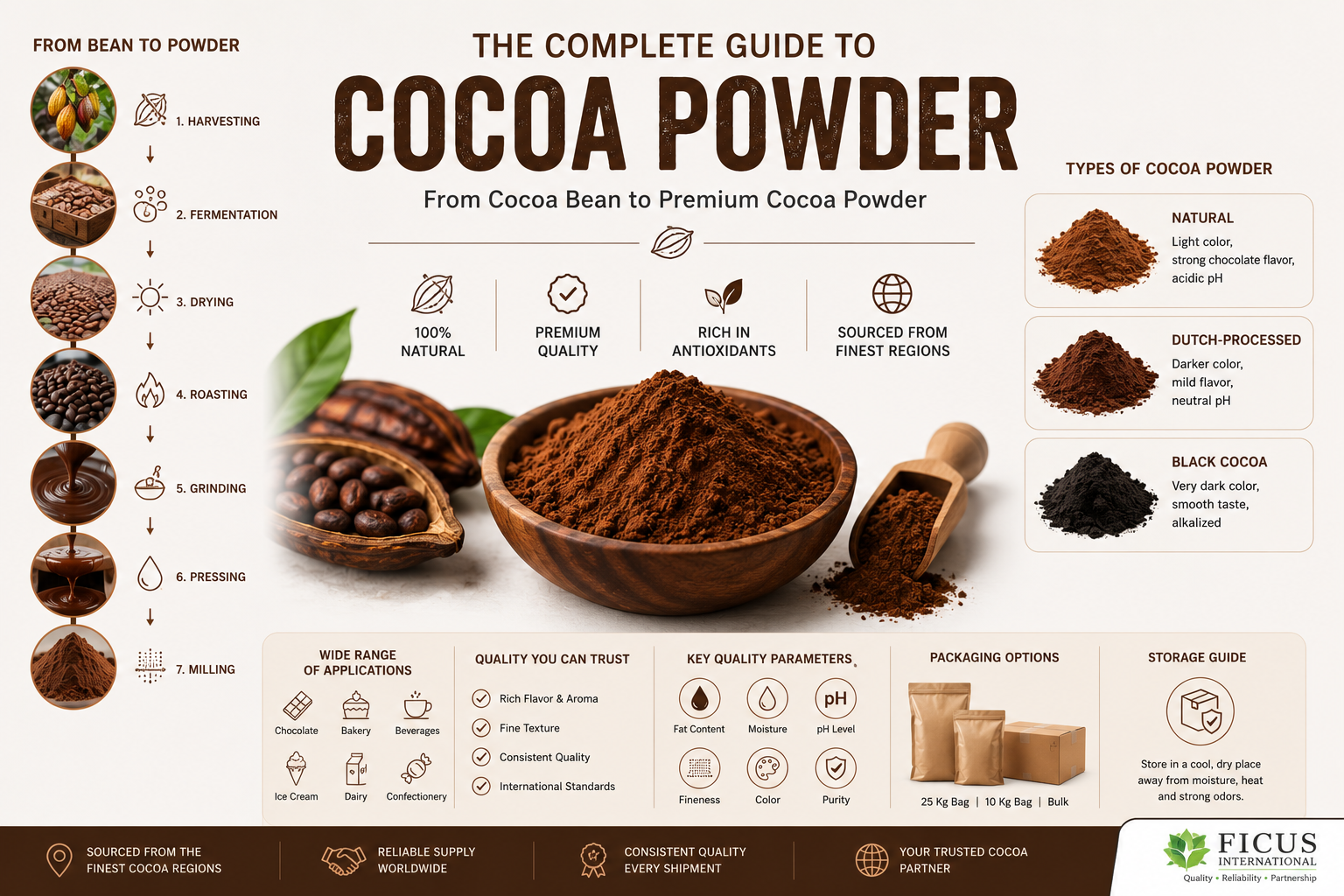
 Cocoa powder is one of the world's most versatile and widely used food ingredients. From rich chocolate cakes and premium beverages to ice cream, confectionery, bakery products, and nutritional supplements, cocoa powder plays an essential role across numerous industries. Beyond its delicious chocolate flavor, it is valued for its natural antioxidants, deep color, and functional properties that make it an indispensable ingredient for manufacturers worldwide.
Whether you are a food manufacturer, importer, distributor, wholesaler, or simply interested in learning more about cocoa powder, understanding its production process, types, quality standards, and applications can help you make informed decisions. This comprehensive guide explores everything you need to know about cocoa powder—from how it is made to how to identify high-quality products suitable for commercial and industrial use.
Cocoa powder is a fine powder produced by processing cocoa beans, the seeds of the cacao tree (Theobroma cacao). After harvesting, fermenting, drying, roasting, and grinding the beans, cocoa liquor is produced. Most of the cocoa butter is then pressed out of the liquor, leaving behind a solid cocoa cake. This cake is finely milled to create cocoa powder.
Unlike chocolate powder, cocoa powder contains no added sugar or milk solids, making it a pure cocoa ingredient used in a wide variety of food and beverage formulations.
The journey from cocoa pod to cocoa powder involves several carefully controlled steps that preserve flavor, aroma, and quality.
Ripe cocoa pods are harvested from cacao trees and opened to remove the cocoa beans surrounded by sweet white pulp.
The beans are naturally fermented for several days. This is one of the most important stages because it develops the characteristic chocolate flavor and reduces bitterness.
After fermentation, the beans are dried until they reach the appropriate moisture content for storage and export. Proper drying prevents mold growth and preserves bean quality.
The dried beans are roasted under controlled temperatures to enhance flavor, reduce moisture, and prepare them for further processing.
Roasted cocoa nibs are ground into cocoa liquor, a smooth paste containing both cocoa solids and cocoa butter.
The cocoa liquor is mechanically pressed to separate cocoa butter from the cocoa solids.
The remaining cocoa cake is finely ground into cocoa powder and sieved to achieve a consistent particle size suitable for commercial applications.
Natural cocoa powder retains its natural acidity and has a light to reddish-brown color with a strong chocolate flavor. It is commonly used in baking recipes that contain baking soda because the acidity helps create the desired rise.
Dutch-process cocoa powder is treated with an alkalizing agent to reduce acidity. This process creates a darker color, smoother flavor, and improved dispersibility, making it popular in beverages, premium chocolates, and desserts.
Black cocoa powder undergoes more extensive alkalization, resulting in an almost black appearance and a distinctive flavor. It is widely used in sandwich cookies, premium baked goods, and specialty confectionery.
Although both originate from cocoa beans, they differ in several important ways.
Natural cocoa powder has a lighter color, higher acidity, and a more pronounced chocolate flavor, while Dutch-process cocoa powder is darker, less acidic, smoother in taste, and better suited for applications requiring a rich, dark appearance. Choosing the right type depends on the intended product and formulation.
Cocoa powder is an essential ingredient in many industries because of its flavor, color, and functional properties.
It is widely used in:
Its versatility allows manufacturers to develop products with consistent taste, appearance, and quality.
Industrial buyers typically evaluate cocoa powder based on several quality parameters before purchasing.
Important specifications include:
Consistent specifications are essential for maintaining product quality during large-scale food manufacturing.
Pure cocoa powder is naturally rich in flavonoids and polyphenols, compounds known for their antioxidant properties. When incorporated into a balanced diet, cocoa powder may contribute to overall wellness.
Research suggests cocoa contains minerals such as magnesium, iron, potassium, and copper, along with dietary fiber. Because unsweetened cocoa powder contains no added sugar, it is frequently used in recipes designed to provide chocolate flavor while allowing manufacturers and consumers to control sweetness.
Selecting premium cocoa powder involves more than simply looking at color. High-quality cocoa powder should have a pleasant chocolate aroma, consistent particle size, good flowability, low moisture content, and be free from foreign matter or off-flavors.
Reliable suppliers also provide technical specifications, certificates of analysis, and quality assurance documentation to ensure every shipment meets customer requirements.
To maintain freshness and quality, cocoa powder should be stored in a cool, dry environment away from direct sunlight and strong odors. Proper packaging helps protect the product from moisture absorption and contamination during storage and transportation.
Commercial cocoa powder is commonly supplied in food-grade bags suitable for export and long-distance shipping.
West Africa is one of the world's leading cocoa-producing regions, supplying a significant share of the cocoa used by international chocolate and food manufacturers. Favorable growing conditions, experienced farming communities, and established export infrastructure have made the region an important source of high-quality cocoa products.
Manufacturers around the world rely on West African cocoa for its consistent quality, flavor characteristics, and dependable supply.
Choosing a reliable supplier is just as important as selecting the right cocoa powder. Buyers should consider product consistency, quality assurance, export experience, packaging standards, logistics capabilities, documentation support, and transparent communication before making purchasing decisions.
Working with an experienced exporter can help ensure products arrive according to agreed specifications while simplifying international procurement.
Ficus International supplies high-quality cocoa products sourced with a commitment to consistency, quality, and customer satisfaction. We work closely with trusted partners to provide cocoa powder suitable for food manufacturers, distributors, importers, wholesalers, and industrial buyers.
In addition to cocoa powder, our product portfolio includes cocoa beans, cocoa butter, raw cashew nuts, shea butter, annatto seeds, and Ivorian teakwood. Our focus on reliable sourcing, quality control, and efficient export logistics enables us to support customers across global markets.
Is cocoa powder the same as chocolate powder?
No. Cocoa powder is pure cocoa solids, while chocolate powder typically contains sugar, milk solids, and other ingredients.
What is the difference between natural and Dutch-process cocoa powder?
Natural cocoa powder is acidic and has a stronger chocolate flavor, whereas Dutch-process cocoa powder is alkalized, less acidic, darker, and smoother in taste.
What industries use cocoa powder?
Food processing, bakery, confectionery, beverage manufacturing, dairy production, nutritional supplements, and dessert manufacturing all use cocoa powder.
How should cocoa powder be stored?
Store it in a cool, dry place away from moisture, direct sunlight, and strong odors to preserve its quality and shelf life.
Cocoa powder is much more than a simple baking ingredient—it is a key raw material used by manufacturers across the global food industry. Understanding how cocoa powder is produced, the different types available, quality specifications, and industrial applications helps buyers select products that best meet their manufacturing requirements.
Whether you are sourcing cocoa powder for chocolate production, bakery applications, beverage manufacturing, or food processing, partnering with a dependable supplier is essential for maintaining product consistency and supply chain reliability.
At Ficus International, we are committed to supplying quality cocoa products backed by dependable service, transparent communication, and efficient international logistics, helping businesses build lasting partnerships in the global agro-commodity market.